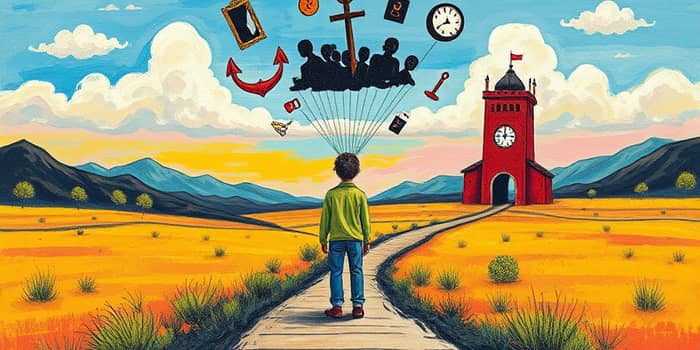
Every day, individuals and organizations make countless decisions, from choosing what to eat for breakfast to selecting multi-million-dollar investments. Yet few pause to consider how systematic errors in thinking shape these choices. Behavioral biases are invisible forces that steer our judgments, often with costly consequences.
Behavioral biases are mental shortcuts or patterns of thought that deviate from perfect rationality. They are subconscious mental shortcuts rooted in emotions, past experiences, and social influences. While heuristics speed up decision-making, they introduce predictable mistakes.
In both personal and professional contexts, these biases can lead to suboptimal or irrational decisions, affecting relationships, finances, and organizational health. Recognizing their presence is the first step toward mitigating their impact.
Below is a concise overview of ten core biases that influence decisions across various domains.
Confirmation bias leads people to seek, interpret, and remember information that supports their pre-existing views. For example, an investor convinced that a stock will soar might only read bullish forecasts, ignoring warning signs. This bias can create echo chambers and block meaningful learning.
Over time, confirmation bias fosters overcommitment to flawed strategies and distorts reality by filtering out disconfirming data. In organizational settings, teams may cherry-pick evidence to justify projects instead of conducting honest evaluations.
Anchoring bias occurs when the first number or fact encountered unduly influences subsequent judgments. In salary negotiations, the initial offer often becomes the anchor, shaping all counteroffers. Even experienced negotiators subconsciously adjust around that anchor.
Anchoring can impair decision quality in pricing, forecasting, and legal judgments. Being aware of the anchor’s impact is crucial to maintain objectivity when new, more relevant information emerges.
Overconfidence is pervasive. Studies show that 78% of Americans think they are better-than-average drivers, and 64% of retail investors overestimate their financial expertise. This bias leads individuals to underestimate risks and ignore warning signals.
Unchecked overconfidence can result in reckless investments, unrealistic project timelines, and resistance to constructive feedback. Cultivating humility and seeking external input are vital defenses.
Groupthink arises when the desire for harmony overrides critical analysis. Teams may suppress dissent to preserve unity, leading to flawed decisions. Similarly, herd mentality drives individuals to follow the crowd, as seen in speculative market bubbles.
Both biases stifle innovation and critical thought. Encouraging diverse perspectives and assigning a devil’s advocate can break this dysfunctional pattern.
Status quo bias describes our preference for familiarity, even when better alternatives exist. Companies might stick with outdated software to avoid change, hindering growth. Self-serving bias, on the other hand, attributes successes to personal skill and failures to external factors, blocking honest self-assessment.
Together, these biases protect our ego but erode accountability and adaptability, both critical for continuous improvement.
Evolution equipped humans with fast heuristics for survival. In modern contexts, these shortcuts often misfire. Emotional triggers, such as fear of regret or desire for social acceptance, can amplify biases. Environmental cues—marketing messages, media narratives, social proof—further entrench our mental shortcuts.
Recognizing these underlying forces helps us design decision environments that minimize bias, such as by altering default options or anonymizing initial judgments.
In finance, biases like loss aversion and herd mentality inflate market swings and contribute to crashes, as seen in the 2008 real estate crisis. Within organizations, groupthink stalls innovation, while status quo bias resists digital transformations.
For individuals, everyday choices—from purchasing electronics to hiring a new team member—are colored by these mental shortcuts. Left unchecked, biases create blind spots that limit opportunities and propagate mistakes.
The dot-com bubble of the late 1990s exemplifies herd mentality and confirmation bias, as investors ignored shaky fundamentals in pursuit of quick gains. In hiring, anchoring on a polished resume can overshadow deeper evaluations, leading to costly mismatches.
Organizations resisting cloud migration due to status quo bias risk falling behind more agile competitors. By contrast, firms practicing structured pre-mortems and embracing dissent often navigate uncertainty more successfully.
Behavioral biases are pervasive and powerful, shaping decisions in ways we rarely perceive. By understanding their evolutionary roots and emotional triggers, we can implement concrete strategies—awareness, structured processes, and diverse perspectives—to reduce their influence.
Developing a habit of reflective decision-making and seeking challenging viewpoints transforms biases from hidden pitfalls into opportunities for growth. Ultimately, mastering these insights leads to more rational, equitable, and effective outcomes in every aspect of life.
References